
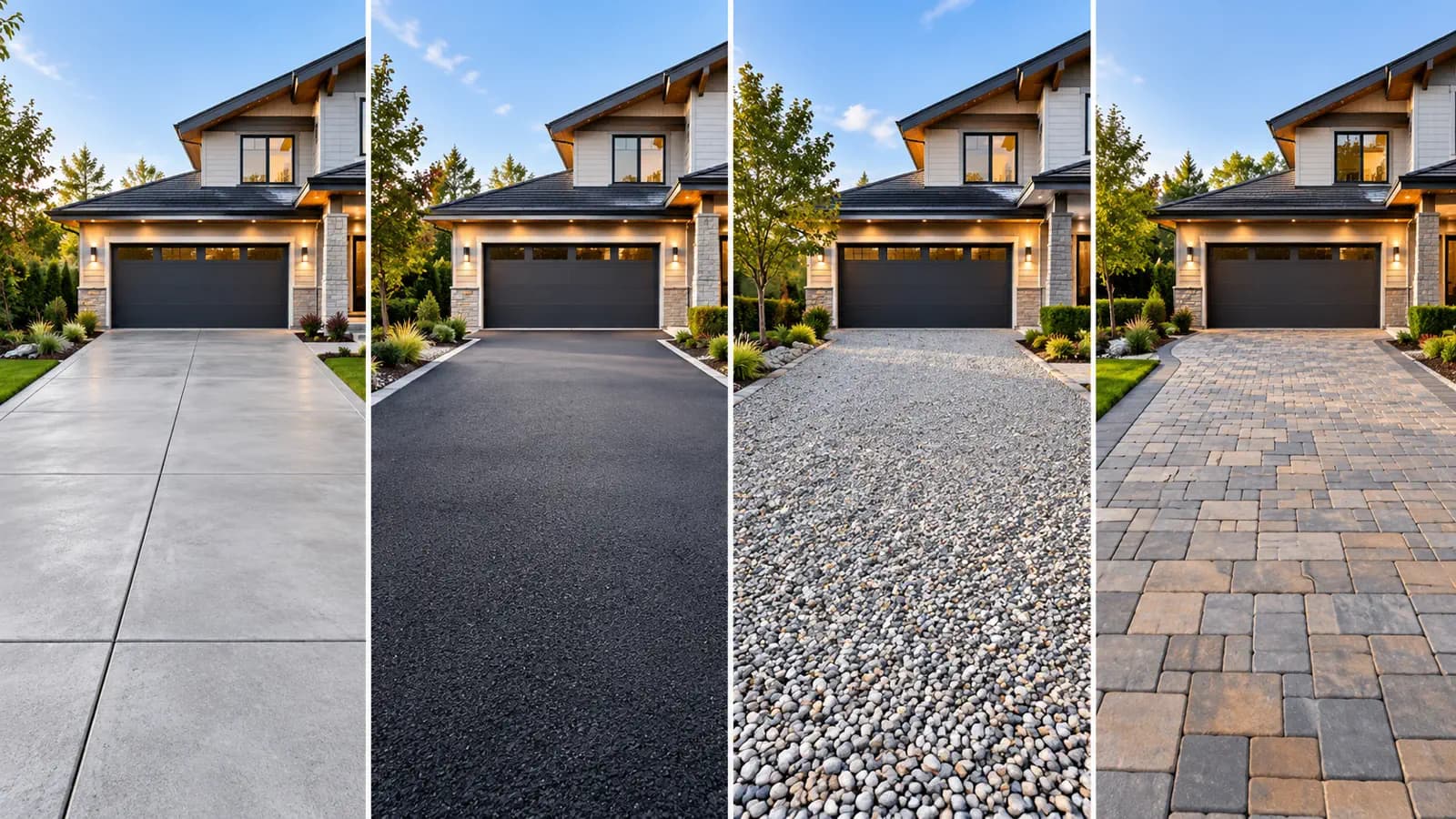
What determines driveway cost?
Driveway area, selected material, existing-surface removal, site preparation, grading, drainage considerations, and site conditions are all supported inputs in the HomeCostNest methodology.
Concrete driveway cost
Concrete uses the current market-specific installed benchmark and driveway area. US and UK datasets remain separate. Removal and selected site work are only included when relevant to the entered project.
Asphalt driveway cost
Asphalt is the common US term; tarmac is the UK-specific option. The calculator applies the selected market’s installed material range and does not turn a US benchmark into pounds.
Gravel driveway cost
A lower material benchmark does not make grading, base conditions, drainage, or access irrelevant. Use the site-condition inputs to reflect work supported by the methodology.
Paver driveway cost
Pavers in the US and block paving in the UK have market-specific benchmark structures. Preparation and project complexity can affect the upper planning range.
United States and United Kingdom planning
The calculator uses USD and square feet for US methodology and GBP and square metres for UK methodology. These are separate datasets, not simple currency conversions.
Planning takeaway
Use the calculator to compare material approaches and prepare focused questions for contractors. Permits, unusual drainage, major site work, and contractor-specific pricing may need separate assessment.
Shortlist materials with the whole build-up in view
US EPA guidance explains that permeable pavement performance depends on more than the visible surface: bedding, base or sub-base, soils, slope, storage and maintenance can matter. In England, official front-garden guidance links permitted-development treatment to permeability or directing runoff to a permeable area; homeowners elsewhere in the UK should check the rules for their nation and council.
HomeCostNest planning framework: use the Driveway Cost Calculator with the same measured area and site assumptions for each supported material. Change one material at a time, then compare removal, base preparation, grading, drainage and access separately. The result is a planning comparison, not a specification; a contractor or designer still needs to assess the ground and drainage route.
- Ask what surface, bedding, base and edge restraint are included.
- Confirm where runoff will go and whether an outlet or underdrain is proposed.
- Compare maintenance expectations and repairability for the intended use.
- Keep demolition, disposal and unusual ground work visible as separate scope items.
Plan with the right calculator
Enter your project details and select the United States or United Kingdom market for Low, Typical, and High planning estimates.
Sources & references
These references support the specific planning and regulatory points identified below. Calculator ranges remain HomeCostNest planning outputs unless a section says otherwise.
- NPDES Stormwater Best Management Practice: Permeable Pavements · U.S. Environmental Protection Agency
Supports: Permeable pavement can be used for driveways and relies on a permeable surface plus bedding and base layers that manage stormwater.
- Permeable surfacing of front gardens: guidance · GOV.UK
Supports: In England, front-driveway drainage and planning treatment can depend on surface permeability, drainage approach and paved area.